Can a vasectomy reverse itself after 14 years?

A vasectomy is one of the safest and most effective birth control methods. But like other medical procedures, it isn’t foolproof. 

There is a possibility that a vasectomy can fail to prevent pregnancy in extremely rare cases with roughly a 1-percent chance of failure. 

Though vasectomy failures can be due to various reasons, several cases are due to a reversal of the procedure over time. 

How can a vasectomy reverse itself?

In rare instances, a vasectomy can reverse itself and is known to occur in about 0.025 percent of cases, equivalent to 1 reversal in 4,000 vasectomies. Such a reversal involves reconnection of the vas deferens after successful surgery and an effective post-vasectomy plan.

Remember that during a vasectomy, the vas deferens—the two tubes that carry sperm from the testicles to the urethra—are cut and sealed off to block sperm from reaching semen. The channel in the vas deferens is broken at the point where it is cut to eliminate the passageway of the sperm to combine with the semen.

However, in some cases, the vas deferens grow back several years after the procedure. The growth may continue until a connection is recreated, allowing the free flow of sperm to the urethra.

An extremely rare and successful reconnection can occur after 10 to 14 years or more and is usually almost impossible to notice. 

Most men only realize that their vas deferens have reconnected after their sexual partners get pregnant.

What can make a vasectomy reverse itself?

After a vasectomy, sperm may leak from the vasectomy site or a rupture and directly into the epididymis. Since sperm have immune system stimulating properties (antigenic qualities), it recognizes sperm as foreign and attacks them.

The sperm leakage triggers an inflammatory reaction that causes the body to develop pockets to trap the sperm in scar tissues and inflamed cells. 

With time, spheres of cells called sperm granulomas form and produce nodules in the vas deferens that may grow and result in the reconnection of the vas deferens. 

The risk of a reversal increases with the presence of sperm tissue at the vasectomy site.

Another reversal mechanism is scar tissue. 

With cells present after a vasectomy forming tiny channels that allow sperm to squirm their way through the tiny tears in the scar tissue, small drainage channels appear in the tissue on the ends of the severed vas deferens. Over time, these channels may reconnect to the divided vas deferens, providing a pathway for sperm to the seminal vesicles. The risk of a reversal via scar tissue increases with open-ended vasectomy, where only one end of the vas deferens is closed.

However, you shouldn’t be overly concerned if you consider a vasectomy or have already undergone the procedure.

The chances of a reversal are pretty rare—almost negligible—and extremely unlikely in most cases. 

At St. Pete Urology, we are proud of our excellent record of successful vasectomies. Our skilled and experienced urologists understand the factors that may lead to vasectomy failure, including non-severance of the vas deferens, non-observance of a period of sperm-free ejaculate, reconnection of the vas deferens, and duplication of the vas deferens. So we tailor and conduct every vasectomy under strictest adherence to best practices. 

Call St. Pete Urology today for more information on vasectomy and vasectomy reversal.

What are the key signs of prostate cancer?

Key takeaways

  • Prostate cancer occurs when prostate cells grow and multiply uncontrollably, and can be malignant and life-threatening if it spreads to other parts of the body.
  • Early-stage prostate cancer does not have any unique signs or symptoms and is difficult to detect, making regular screening and testing important for early detection.
  • Common screening tests for prostate cancer include the PSA test and the DRE, and men who are 55-69 years old, African-American, or have a family history of prostate cancer should consider getting screened.

The prostate is a tiny, walnut-shaped gland in the pelvis. Located near the bladder and felt through a digital rectal exam, the prostate produces the fluid that transports and nourishes sperm. The fluid—called seminal fluid—is squeezed out via the urethra during ejaculation.

What is prostate cancer?

Prostate cancer occurs in the prostate when prostate cells grow and multiply non-stop. The growth of the prostate can either be benign or malignant. Benign growth of the prostate, also called benign prostatic hyperplasia, is rarely a threat to life as it doesn’t invade tissues around your prostate, doesn’t spread, and can be removed or shrink back.

On the other hand, prostate cancer is a malignant growth that can spread to nearby organs like the bladder or rectum and is, therefore, a threat to life. This cancer can spread to other parts of your body and may grow back after removal.

When prostate cancer cells break away from the prostate, they can spread through lymph nodes or blood vessels to other parts of your body. 

Upon spreading, the cancer cells attach to other tissues and grow to form new tumors that cause damage in the areas where they land.

Prostate cancer is one of the most common types of cancer. 

Although most cases of prostate cancers grow slowly and are restricted to the prostate gland, where they tend to cause little harm, some types of cancer are aggressive, spread quickly, and are life-threatening.

What are the key signs of prostate cancer?

Early-stage prostate cancer doesn’t have any unique signs or symptoms. It starts in the outer areas of the prostate and grows slowly. These areas are away from the urethra, so the growing tissue mass does not press against the tube and affects your urination.

There are no early urinary signs of prostate cancer. When symptoms occur, they are usually related to the non-cancerous condition called enlarged prostate or another health condition.

Nevertheless, as the tumor grows and spreads, it begins to affect the organs around the prostate. So with time, it will eventually show signs as it breaks out of the gland (locally advanced prostate cancer) or spreads to other areas of the body (advanced prostate cancer).

Unfortunately, even late-stage prostate cancer shares signs with other urological disorders, making it difficult to tell whether it is due to cancer or other conditions, such as prostatitis or benign prostate enlargement (BPH). 

That is why the key to establishing if you have prostate cancer is seeing a urologist, who will order tests to help find out what is causing the symptoms.

When they occur, the symptoms of prostate cancer include:

  1. Dull pain in the lower pelvic area
  2. Trouble starting to urinate or to empty your bladder
  3. Interrupted or weak urine flow
  4. Dribbling of urine after urinating or a feeling that the bladder hasn’t emptied properly
  5. Frequent urination, particularly at night
  6. Pain or burning sensation when urinating
  7. Difficulty having an erection, painful ejaculation, or decrease in the amount of ejaculate
  8. Blood in urine or semen
  9. Pain or pressure in the rectum
  10. Persistent pain in the back, hip, or pelvis
  11. Unexplained weight loss
  12. Bone pain
  13. Loss of appetite

Diagnosis of prostate cancer

Prostate cancer is highly treatable when detected early. But for the condition to be discovered early, frequent screening is necessary. 

Screening means you undergo testing even though you have no symptoms. The prostate-specific antigen (PSA) test and the digital rectal examination (DRE) are the most commonly used screening tests. Both help detect cancer early, although they aren’t perfect tests.

Speak with your urologist about whether or not you should undergo screening. Your doctor will assess your degree of risk and decide whether you should have the PSA test and the DRE. Generally, you should be screened if you are 55-69 years or older, African-American male, or have a family history of prostate cancer.

If the screening tests show that you might have cancer, your doctor will recommend a biopsy for confirmation. The decision to have a biopsy is based on the PSA and DRE results. Your doctor will also consider family history, ethnicity, and other health factors.

At St Pete Urology, we offer screening, diagnosis, and treatment of prostate cancer. Through our patient-centered, compassionate approach to care, we have ensured that most of our at-higher-risk clients are enrolled in screening.  

We have employed a collaborative, multidisciplinary approach that ensures all our patients get the best possible care. 

Call us today for more information on prostate cancer and other urology disorders.

References

What color of pee is bad?

Do you ever pay attention to the color of your pee? If not, then starting today, you should.

The color of your pee can give you a hint of what is going on in your body—and whether you are well or unwell.

Urine is made in your kidneys as your blood is filtered. The kidneys make pee to help remove toxins and other harmful substances from your blood. So your pee is not just made of water and salt but also contains wastes such as uric acid and urea, and other substances found in your blood.

What is the color of pee?

The normal color of pee is yellow because of the yellow pigment, urochrome, made in your body.

When you are healthy and adequately hydrated, you should expect to produce light yellow and close-to-clear pee.

However, lots of things can change the color of your pee.

For instance, your urine will have no color if you’re drinking a lot of water or taking diuretics drugs that enhance fluid loss.

But when dehydrated, your pee becomes amber, dark yellow to light brown.

The color of your pee also changes with the type of foods, medications, or illness.

What color of pee is bad?

  1. Clear

Clear urine typically indicates you’re drinking too much fluid, and you need to cut back on your water intake. Although staying hydrated is a good thing, drinking too much water can rob your body of electrolytes.

Besides, consistently clear pee may indicate that you have a liver problem, like viral hepatitis or liver cirrhosis.

If your pee is clear for a while and you’re not consuming large amounts of water, then you should see your doctor.

  1. Dark brown

Dark brown pee color may be due to medications, such chloroquine (Aralen) and metronidazole (Flagyl), or extreme exercise that causes muscle injury.

It may also be due to eating large quantities of aloe, rhubarb, or fava beans.

Most often, brown pee indicates you should drink more water, showing that you are dehydrated.

In some cases, brown pee results from diseases. One of them is porphyria—a rare disorder that usually involves sensitivity to light and leads to brown urine because of the breakdown of red cells.

Pee can also be brown when you have a buildup of bile, liver disease, or a tumor.

You should see a urologist if your pee is brown and doesn’t get better after a day or so.

  1. Cloudy

Cloudy, foamy, or frothy pee is bad and requires immediate medical help.

When urine has bubbles or foam, you may be consuming too much protein in your diet, but a persistently cloudy pee indicates a more serious condition, such as kidney disease, diverticulitis, Crohn’s disease, or other chronic condition.

Make sure to let your doctor know about it as soon as possible.

  1. White

Pee that is cloudy white could mean you have kidney stones or a severe infection.

The white color is probably due to the presence of pus in your urine.

Make sure to see your urologist immediately for appropriate medication.

  1. Pink or red

Your pee may be pink or red due to foods like blackberries, beets, rhubarb, and carrots. But red or pink color of pee may also be caused by medications like the antibiotic rifampin or phenazopyridine for urinary tract infections (UTIs).

In the worst case, pink or red pee is due to blood in urine caused by urinary tract infections, an enlarged prostate, kidney disease, a tumor, kidney stones, or cysts.

If the color change occurs together with burning pain, odd smell, or any other unusual symptoms, then it certainly means you have an underlying health problem.

So if you have red pee and have recently not eaten the foods above, then you should visit your doctor immediately for help.

  1. Orange

Pee that has the color of citrus-flavored soft drink may be due to medications such as high-dose vitamin B12, the antibiotic isoniazid, or the UTI drug phenazopyridine. But it can also mean you’re dehydrated or you have a problem with your bile duct or liver.

If you have orange urine in addition to light-colored stools, then bile might be reaching your bloodstream due to problems in your bile ducts or liver.

It could be a result of adult-onset jaundice.

 Make sure to speak with your doctor about it.

  1. Blue

Blue urine is usually due to brightly colored food dyes and medications such as amitriptyline and indomethacin.

If you are not taking dyed food or these types of medications, the blue tinge may be due to bacterial infection by Pseudomonas aeruginosa or the rare condition hypercalcemia—too much calcium in your bones.

Generally, blue pee is rare and is almost often related to diet.

  1. Green

Your pee may be green due to vegetables in your diet.

However, green pee is usually bad as it is associated with Proteus infection.

If your pee is green, you should see your doctor, establish the source, and prescribe a course of antibiotics to clear up the urinary tract infection.

When should you see your doctor?

Speak with your doctor every time you see a change in your urine color that you can’t link to a new medication or a recent meal, particularly if the color change lasts more than a day.

Don’t hesitate to inform your doctor about it as it could signify a serious health condition.

A change in color of your pee that comes with a fever, vomiting, side or back pain, feeling very thirsty, or discharge requires urgent attention. Your doctor will run tests on your urine to determine what is going on and provide proper treatment.

What is sex like with a penile prosthesis

There is no such thing as “normal” when it comes to sex. What you like isn’t necessarily what another person likes. How important it is to you and how often you want it is also a personal preference, but what is common for everyone is the desire to have a pleasurable sexual encounter.
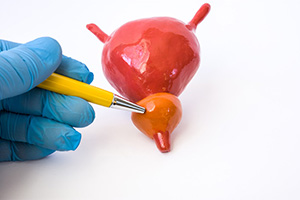
Men with erectile dysfunction who intend to have a penile implant inserted into their penis often want to know how it would impact their sexual pleasure.

Strong, reliable erection

A penile prosthesis enables you to have an erection that is strong enough for satisfactory sex. You will have an erection similar to a natural erection and will not have problems keeping it throughout sexual intercourse.

At St Pete Urology, we offer both inflatable and non-inflatable penile implants. An inflatable implant has two rods filled with fluid from a reservoir near the bladder. As the rods fill, the penis becomes erect. When there is no fluid in the rods, the penis is fully deflated and unnoticeable.

With the non-inflatable implant, a single rod is surgically implanted within the erection chamber of your penis. The rod keeps the penis in a semi-rigid state so that you merely need to lift it into position or adjust it by hand for sexual intercourse.

Regardless of whether the implant is inflatable or in a semi-rigid state, it will support your penis without making it larger or affecting the shape of its head. Expect your penis to be erect to about the same size as before you got the implant, and provide enough hardness for penetration and satisfying sex.

Unhindered sensitivity

A penile prosthesis does not affect the sensitivity of the penis, its glans, or its skin. You will not lose sensitivity and will generally respond to sexual stimulation. You will also have no limitations such as axial effort, traction, or your partner tightening the penis during sexual intercourse.

You can still enjoy different positions and enjoy normal orgasm and ejaculation—deriving maximum pleasure from your sexual encounters. The penis stays rigid even after orgasm, and it is up to you to choose to release the valve to remove the fluid from the rods and end the erection. You should also make sure to have good lubrication during intercourse.

Once you have a penile prosthesis, it may destroy your natural erection reflex. You should have the implant only when recommended by your urologist.

Hidden and unnoticeable

Due to the small incision made for the procedure, the healed scar after penile implant surgery is subtle and hidden to casual observers. The implant will be fully concealed and remain private. You can freely enjoy sex without worrying about your partner knowing you have an implant.

No one will be able to tell that you have a penile prosthesis until they see the small scar at the bottom of your penis. Even in the shower or locker room, it will remain undetectable.

Do you have erectile dysfunction? Would you like to restore your sexual function? At St Pete Urology, we understand that erectile dysfunction can severely impact your relationships and your quality of life. We offer various solutions that can help you with this predicament.

We typically recommend a penile prosthesis for patients who have not found the other ED treatments effective. After the implant surgery, patients can expect to enjoy healthy sex lives, enhanced self-esteem, and more satisfying relationships.

Schedule a consultation with one of our skilled and experienced surgeons at St Pete Urology to find out if a penile implant could be an excellent option for you

Urologists: What they do and what to expect

A urologist is a medical doctor who specializes in the urinary system, which includes kidneys, bladder, urethra and ureters. Urologists also specialize in issues related to the male reproductive system. Specialization in this field requires a great deal of education. Urologists go through four years of medical school followed by five years of specialized training focusing specifically on urology. By the time a urologist enters a practice they are experts in their field.

There are many reasons why your primary care doctor may recommend a urologist. Urologists help patients with issues like urinary tract infections, stubborn kidney stones, enlarged prostates, incontinence and pelvic prolapses. There are also various forms of cancers that urologists monitor and treat, like prostate cancer. For men, their urologist can be their main point of contact for issues like erectile dysfunction.

Urologists have a variety of tools to help their patients achieve positive outcomes with whatever issue they may be facing. They will consult with their patients to determine what is the best method to treat each individual’s medical issue. Treatment options will vary case to case. Treatments can be both surgical and non-invasive. For example, a urologist may perform surgery to implant stints in the urinary tract to help with kidney stones or perform biopsies on prostates with cancer. Urologists may use new technologies like HIFU, which uses ultrasound waves to break up kidney stones.

A patient seeing a urologist for the first time can expect an experience similar to seeing any other kind of doctor. The appointment might include collecting a urine sample, depending on the reason for the visit. A first visit usually will include a questionnaire about patient’s health history and issues. It is important to answer these questions as truthfully as possible, even though discussing issues regarding incontinence, urinary issues or erectile dysfunction can be embarrassing for many patients. It is helpful to remember that urologists deal with these issues on a daily basis and are accustomed to having these conversations with their patients. There is no issue a patient should be too embarrassed to discuss.

For some patients, seeing a new doctor can be frightening. At St Pete Urology, doctors understand this and work to create an open environment where doctors and patients can achieve positive and sometimes life-changing outcomes. For more information, visit the St Pete Urology website.

Facts About Stress Urinary Incontinence in Women

What Is Urinary Incontinence?

Many women have a silent concern due to urinary incontinence. It somehow seems taboo to talk about the problem, even with a regular doctor or gynecologist. There are approximately 25 million Americans who suffer from some type of urinary incontinence and as many as 80 percent of them are women. Pregnancy, giving birth, going through menopause and even the unique structure of the female urinary anatomy contribute to the disparity between male and female sufferers.

Urinary incontinence is defined as the unintentional loss or leakage of urine. The term “stress incontinence” means that when the body is under exertion it puts pressure on your bladder and the bladder leaks. Some triggers for stress incontinence include running, coughing, sneezing, bending or heavy lifting.

Bladder Retraining

The bladder is controlled by muscles and it can be trained. You may wish to keep a voiding diary, noting things like times of urination, duration between bathroom trips, types of food or beverages that seem to trigger urgency or frequency of bathroom trips. This journal describing your symptoms and potential causes can help if you need to visit a urologist for treatment.

As you establish baselines for your urinary problem, you can start behavior modification and training your bladder. Here’s how to do it:

  • Schedule Your Bathroom Breaks

Start by scheduling bathroom visits. Increase the time periods between those breaks by adding 15-minute increments. Visit the bathroom even if you don’t feel you need to go. You will be working toward longer and longer stretches of time between breaks.

  • Perform Kegel Exercises

When you learn to isolate the muscles that control urine flow, you can practice having more control by performing Kegel exercises while sitting, standing or during urination.

Other Tips to Prevent Overactive Bladder:

  • In addition to bladder retraining, you may want to eliminate or limit beverages that increase the need for urinating, like coffee, tea or caffeinated sodas.
  • Drink fewer fluids before bedtime.

Treating Overactive Bladder With Behavioral Modifications

You needn’t feel alone when you have urinary incontinence. Make an appointment with a urologist who is trained to deal with your condition. Your doctor may take any of the following approaches beyond what you can do on your own:

  • Recommend biofeedback,
  • Send urine or drawn blood to the lab to determine how completely you empty your bladder.
  • Prescribe medicine to address bladder function or tighten muscles.
  • Employ a medical device, such as a urethral insert or a pessary.
  • Try nerve stimulation, using a mild electric current to nerves in the bladder that help control urination.
  • Suggest surgery if indicated.

If you have stress incontinence, you may be limiting yourself from fully participating in life events. Seek treatment from experts like those at St Pete Urology, where surgeons perform hundreds of successful sling surgery procedures every year. For more information, visit the St Pete Urology website.

Treating Voiding Dysfunction in Women

Voiding dysfunction is a problem that affects women in increasing numbers, and it can be an embarrassing condition that curtails daily activities. Voiding dysfunction can take several forms, including urinary incontinence, painful urination and interstitial cystitis. Women over 40 are especially susceptible and it can be uncomfortable subject to bring up in conversations with doctors.

Preliminary Diagnosis

Although your primary care doctor can perform simple testing for a urinary tract infection, you may save time and discomfort by seeing a qualified urologist first. Some urological procedures for diagnosis include:

  1. Urinalysis
  2. Uroflow electromyogram (EMG)
  3. Abdominal X rays (KUB)
  4. Cystoscopy
  5. Uroflowmetry

Initial Care for Voiding Dysfunction

Your primary care doctor may recommend dietary changes such as reducing the amount of alcohol and caffeine you consume. Your doctor may even warn you about the use of tobacco if you are a smoker.

Kegel Exercises

Kegel exercises are often effective at improving voiding dysfunction in the form of bladder leakage in women. Kegel exercises (or Kegels) simply increase the strength of the pelvic floor, and can be done in bed or while emptying the bladder. However, there are instances when the woman’s pelvic floor is too tight and Kegels are not recommended. A urologist can diagnose and recommend the appropriate treatment for the various types of voiding dysfunction.

Additional treatments for voiding dysfunction include muscle relaxants, pelvic floor therapy, self-catheterization and insertion of a neuromodulation device.

Painful Urination and Treatment

Besides being unable to control bladder flow, painful urination is another dysfunction associated with voiding. You may be diagnosed with interstitial cystitis. Some refer to the condition as BPS (bladder pain syndrome). Interstitial cystitis is associated with bladder pain, overactive bladder, bladder distention and, at times, bladder stones.

Once your physician has isolated the source of the problem, he or she may recommend a medication that allows the bladder to relax.

Why Get Diagnosed and Treated for Voiding Dysfunction

Successful treatment of voiding dysfunction will allow you to enjoy life better, with:

  1. Fewer accidents
  2. More control over where and when you void your bladder
  3. Longer intervals between needing to urinate

For those who live in the St Petersburg, Tampa or Clearwater areas, St Pete Urology offers treatment and relief of this condition. Schedule a consultation today to learn how our experienced team offers the most advanced technology, minimally invasive surgery options and compassionate care.

How to tell if your prostate is enlarged?

The prostate gland is an integral part of the male reproductive system. It secretes seminal fluid, which nourishes sperm as they grow and facilitates their transportation during ejaculation. It is located between the bladder and the rectum and surrounds the base of the urethra. Due to its location next to key parts of the urinary system, the health of the prostate gland tends to have a direct impact on the health of a man’s urinary system.

The prostate gland grows larger as a man ages. While this gradual enlargement is normal, by the time a majority of men turn 50, the prostate has reached a size where it may start to affect the normal functioning of the urinary organs near it. It is at this point that a man is said to have an enlarged prostate, or clinically speaking, benign prostate hyperplasia (BPH).

Signs and Symptoms of an Enlarged Prostate

An enlarged prostate presses, pinches or causes a blockage in the urethra. The urethra carries urine from the bladder to outside the body. The direct effects of an enlarged prostate are manifested by difficulty in the discharge of urine. These difficulties could be in the form of:

1. Frequent and sudden urges to discharge urine;

2. Difficulty starting a urine stream;

3. Weak urine stream; and

4. Dribbling urine.

If left untreated, the effects of an enlarged prostate can cause the following complications:

1. Acute Urine retention. This is a complete inability to pass urine. Medical attention must be sought immediately if this occurs;

2. Urinary tract infections;

3. Blood in the urine;

4. Pain when passing urine; and

5. Pain in the lower abdomen.

Sometimes an enlarged prostate does not produce symptoms. When this occurs in some men, it may not even be possible to diagnose the condition because it gives them no trouble at all.

The key to diagnosing and treating an enlarged prostate lies with frequent prostate monitoring by a qualified urologist. Men approaching age 50 should get tested or at least keep a watch out for any of the symptoms listed above. The good news is there are many successful treatment options for the condition. Our specialists at St Pete Urology are experienced and well qualified to help with any questions, concerns and treatment. If you think you may have an enlarged prostate, or are experiencing any problems, by all means contact us. For more information, visit the St Pete Urology website.

What is a Varicocelectomy?

An apt introduction to varicocelectomy would be to describe the relatively common condition known as varicose veins. Varicose veins occur with the swelling and enlargement of the veins in a patient’s legs to the point that the veins become easily visible under the skin. This condition sometimes occurs in the scrotum and the enlargement is known as a varicocele. Varicocelectomy is a surgical procedure that is performed to remove varicoceles from the scrotum. The main cause of varicoceles is a malfunctioning of the valves inside the veins, which causes an accumulation of blood in the veins and causes them to expand. Upon a physical examination, a varicocele is said to feel like a bag of worms.

When to go for a Varicocelectomy

Having a varicocele is not in itself reason to have a varicocelectomy. In most instances, the varicocele does not manifest any symptoms. It does not cause pain or interfere with the sexual or reproductive function. In such cases, a urologist will advise that the varicocele be left undisturbed. However, if the varicocele causes any of the following, then a varicocelectomy should be performed.

  1. Reduced sex drive;
  2. Reduced sperm production resulting in inability to conceive
  3. Pain and swelling of the scrotum;
  4. When the varicocele is on the right side — ordinarily varicoceles occur on the left side of the scrotum. When it occurs on the right side, it is likely that it is the result of a tumor. The urologist will remove the tumor and the varicocele.
  5. Testicular atrophy — where the testes shrink or fail to develop normally because of a varicocele.

Procedure of Varicocelectomy

A varicocelectomy is a minor surgical procedure that allows the patient to leave the hospital the same day. It is a procedure involving cutting or sealing off the affected vein to restore normal blood flow. A surgeon can choose to do it in either of two ways:

1. laparoscopic varicocelectomy — a surgeon makes several small incisions in the lower abdomen and inserts the laparoscope, which projects an image of your anatomy on a screen. He also inserts other small tools which he uses to cut the affected vein.

2. Open Surgery — The surgeon makes incisions large enough to access the affected veins and cut them or seal them off.

Even though self examination can reveal a varicocele, the question of whether to undergo a varicocelectomy can only be answered by a urologist. A urologist who has specialized in the treatment of varicoceles, such as those in St. Pete Urology, should be contacted if a patient finds any of the symptoms listed above. For more information on prevention, diagnosis and treatment, visit the “St Pete Urology” website.

What are 5 warning signs of testicular cancer?

Testicular cancer is cancer of the testes, the male organ responsible for producing male hormones and sperms. It is understood to be one of the rarer cancers, especially when compared to the prevalence of prostate cancer. In addition to its rarity, testicular cancer is also distinguished by the fact that it is one of the most treatable. Research estimates indicate that up to 95 percent of those diagnosed with it are treated successfully. This success rate holds even for cases in which the cancer has spread outside of the testes. Testicular cancer is most common among men of 15-35 years old.

Symptoms of testicular cancer

Testicular cancer does not always exhibit any symptoms and when it does, its symptoms are similar to those of non-cancerous conditions or inflammations. For these reasons, testicular cancer is often diagnosed at a late stage.

Any one or a combination of the following symptoms should serve as warning signs:

1. Lump and swelling in the testicle

A painless lump or a swelling, or a general change in the size of the testes is one sign of testicular cancer. It is not unusual for one testicle to seem larger than the other. However, a noticeable change from what is usually the normal size of either testes should be treated as a warning sign.

2. Pain or discomfort in the scrotum

Ordinarily a lump or swelling does not cause pain. In some cases of testicular cancer, however, patients report an ache in the scrotum holding the affected testes. It also could be a feeling of heaviness in the scrotum causing discomfort.

3. Enlargement and tenderness of breasts

In rare instances, the presence of testicular tumors encourages the development of breast tissue. This is a condition known as gynecomastia.

4. Accumulation of fluid in the scrotum

A sudden and perceptible collection of fluid in the scrotum should be treated as a red flag.

5. Pain in the groin area, abdomen or lower back

This occurs as an extension of the pain in the testes, if any. It also occurs if the cancer has spread from the testes to the lymph nodes around the groin and the abdomen.

It is noteworthy that the symptoms described above could arise from a non-cancerous condition. That may be reassuring news, but any symptoms also should be considered with caution, because they make testicular cancer that much harder to detect. It is advisable to see a urologist if you have experienced any of the above symptoms, if only to eliminate the presence of testicular cancer. Experienced urologists at St Pete Urology can offer help and treatment for urological problems. Their pool of trained urologists can offer consultation and guidance with any questions and concerns you may have. For more information about testicular cancer, visit the St Pete Urology website.